Press
LUPRO의 최신 보도자료를 확인하세요
- [MK News] LUPRO Stands Out as a Key Player in the Success of Saemangeum New Port

- LUPRO

- 2025-12-03

- 51
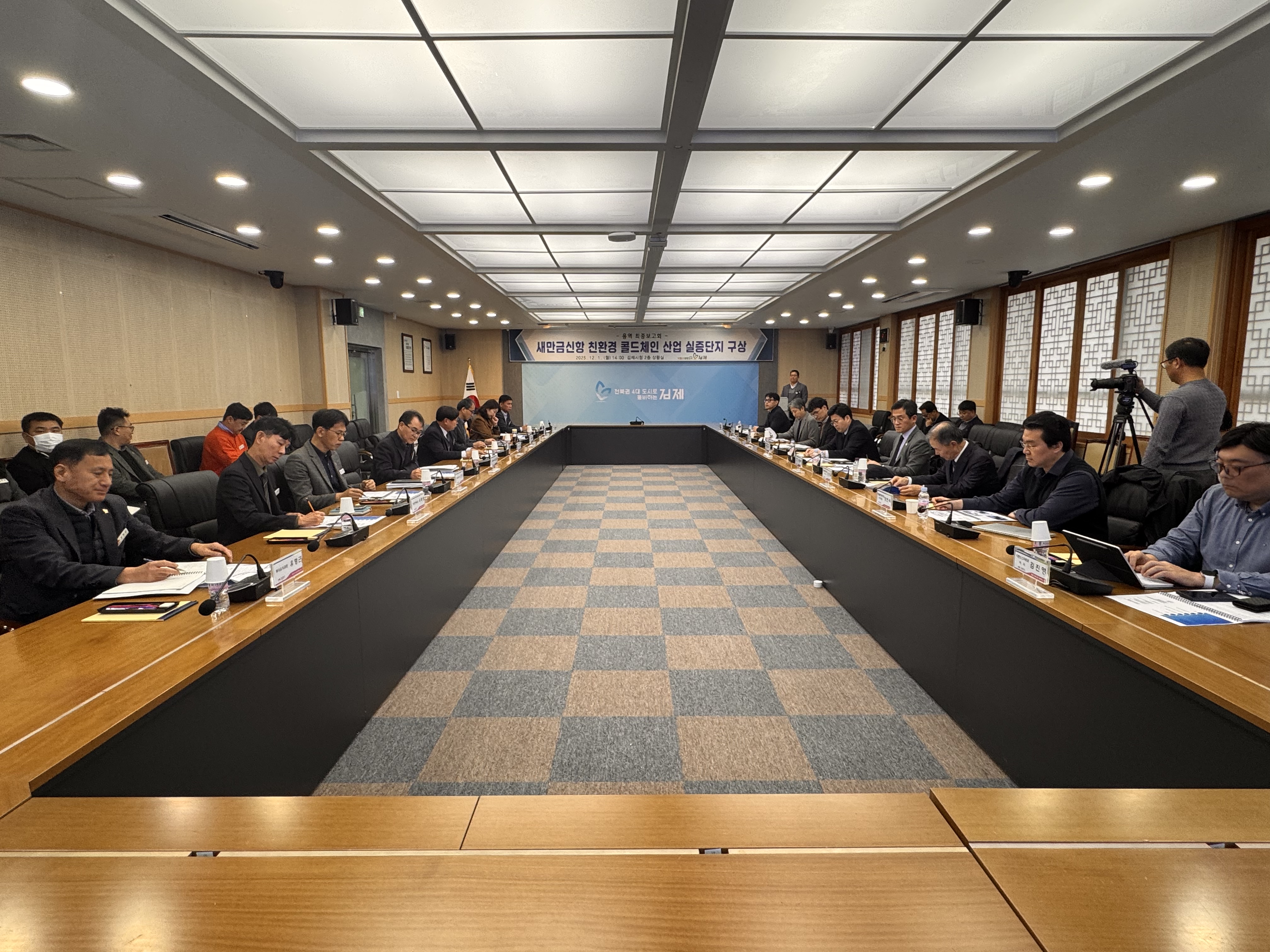
The final report meeting for the research project on the "Saemangeum New Port Green Energy and Cold Chain Convergence Hub Industrial Complex Plan" held at Gimje City Hall on the 1st [Lupro]
LUPRO, a global green energy resource producer, will be at the center of the "Green Energy and Cold Chain Convergence Hub Industrial Complex" to be built at Saemangeum New Port and its hinterland.
LUPRO announced on the 3rd that it attended the final report meeting for the "Saemangeum New Port Green Energy and Cold Chain Convergence Hub Industrial Complex Plan," held at Gimje City Hall on the 1st.
LUPRO announced that it will play a key role in the successful revitalization of the port by importing 10 million tons of green ammonia, worth $7.5 billion, produced in Thailand into the domestic market.
The group of experts who participated in the research project envisioned the creation of a "Green Energy and Cold Chain Convergence Demonstration Complex," which aligns with the new administration's governing philosophy, including the designation of a nationally managed trade port and the support of specialized industries and new industries in the Jeonbuk region, such as renewable energy and agro-food, and the promotion of the energy industry. They also proposed four strategies: establishing an energy and logistics convergence cluster, establishing a global standard-leading platform and certification, creating an early-stage market to attract strategic anchor companies, and fostering an innovation ecosystem based on industry-academia collaboration.
In line with the global trend toward carbon neutrality, Saemangeum New Port leverages its vast hinterland, large-scale renewable energy potential, and the simultaneous development of the Saemangeum Triport, including ports, airports, and railways. This integration will integrate green ammonia production and supply infrastructure and advanced cold chain logistics infrastructure, thereby introducing a circular economy model that leverages both energy and byproducts.
Furthermore, the research team suggested that to ensure the successful opening of Saemangeum New Port and overcome its weaknesses as a latecomer, strategic planning for wharf construction, including green ammonia import and export wharves and specialized cold chain wharves, is necessary from the initial design stage.
Furthermore, stable energy management and a cold chain platform are essential for the growth of RE100 industrial complexes, energy-independent waterfront cities, and rural and fishing villages. Therefore, along with benchmarking advanced overseas ports, the team explored a Saemangeum cold chain certification system to ensure the reliability of Saemangeum's cold chain service and establish logistics standards. Furthermore, they explored ways to secure hinterland through waterway reclamation to address the lack of hinterland.
An LUP representative stated, "Securing LUP's green energy resource volume is essential for Saemangeum New Port, a latecomer to the market. By transporting green ammonia produced in Thailand to the dedicated green ammonia wharf at Saemangeum New Port and expediting domestic supply, we will achieve both the revitalization of Saemangeum New Port and the energy independence of Korea."
LUP recently signed a contract with Thai energy company Ma Corporation to produce 10 million tons of green ammonia resources at a 5.4 million square meter green energy plant near Bangkok, Thailand. The contract is worth US$7.5 billion, or approximately 11 trillion won.
At the final report meeting, Kim Se-ho, Chairman of LUPRO, emphasized, “Achieving carbon neutrality and securing energy security are unavoidable national tasks and crucial factors that will determine the competitiveness of future industries.” He added, “LUPRO’s green energy resources will be an important starting point for Saemangeum New Port to leap beyond Korea and become a global eco-friendly energy hub.”
Reporter Cho Seong-shin
robgud@mk.co.kr


