Press
LUPRO의 최신 보도자료를 확인하세요
- [Dong-A] LUPRO Signs $7.5 Billion Green Ammonia Production Contract in Thailand

- LUPRO

- 2025-12-01

- 31
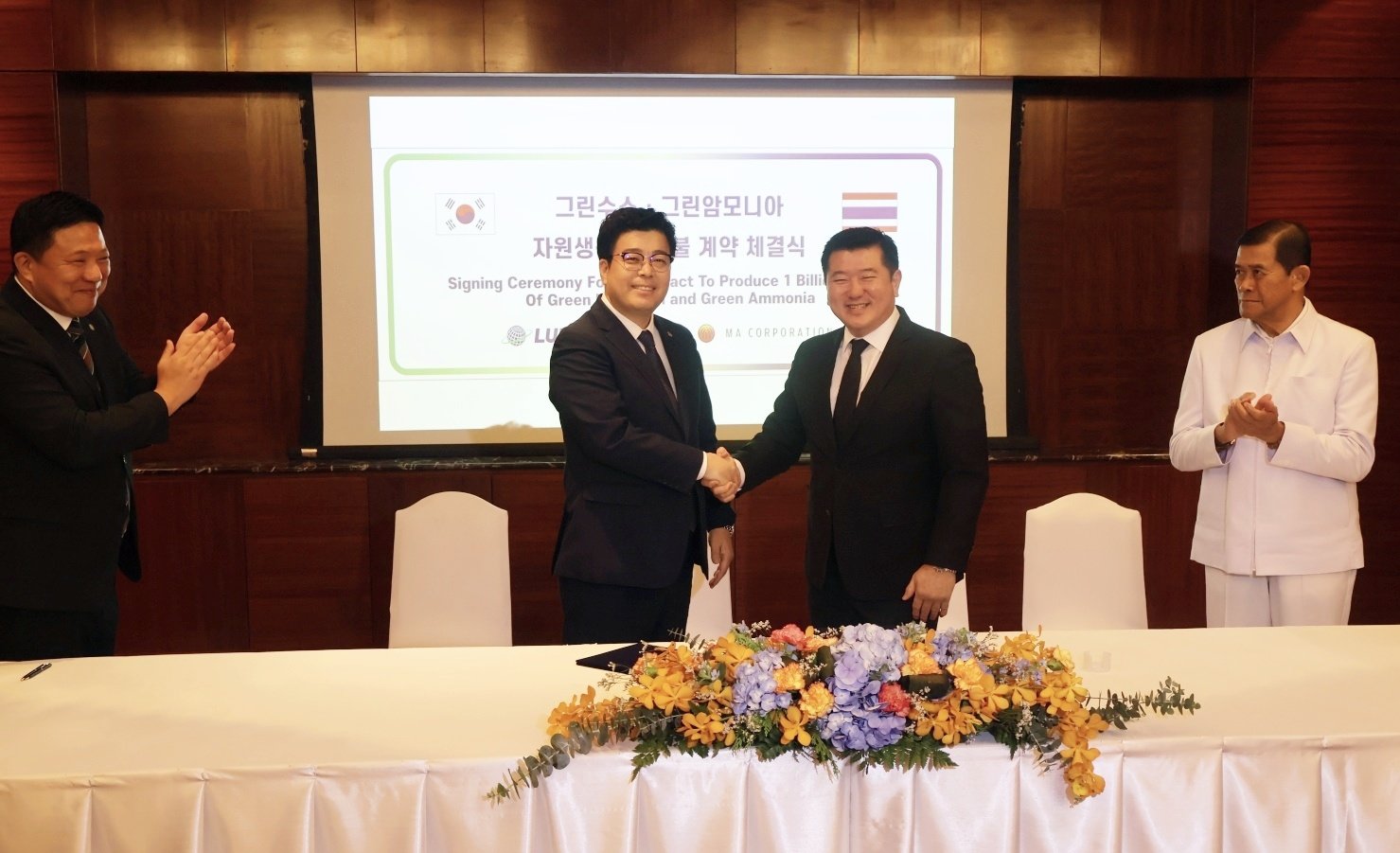
LUPRO, a global green hydrogen and green ammonia resource producer, has signed a contract to produce 10 million tons of green ammonia in Thailand, marking the start of its green energy resource production.
LUPRO will produce green ammonia resources in a joint venture with Thai energy company Ma Corporation at a 5.4 million square meter green energy plant to be built in Chachoengsao, near Bangkok. The contract is worth US$7.5 billion, or approximately 10 trillion won.
Thailand boasts abundant water resources and optimal renewable energy conditions, including high-quality wind and solar energy. As a global maritime logistics hub, it also holds a strategic position, enabling dramatic reductions in production and transportation costs. Building on this competitive edge, the Thai government is demonstrating a strong commitment to carbon neutrality.
In an interview with KBS, Thailand's 56th Deputy Prime Minister, Khon Davaransi, emphasized his commitment to a national green transition, stating, "Thailand is ready to create a 'carbon-zero' environment beneficial to human health."
The green hydrogen and green ammonia produced by LUPRO in Thailand will be supplied to Korea through the Saemangeum New Port and used in co-fueled power generation and hydrogen fuel cell power generation. They will also be exported to Southeast Asia and Europe through MA Corporation.
Achirason Itawol, CEO of MA Corporation, said, "This joint venture will be a significant step toward achieving carbon neutrality in Thailand and Southeast Asia. Together with LUPRO, we will lead the green energy paradigm shift."
LUPRO is also conducting green energy resource production projects based on solar and wind power in the UAE, as well as in Thailand. Based on these global business achievements, Samjong KPMG has valued the company at approximately USD 4.5 billion.
LUPRO Chairman Kim Se-ho stated, "With the 10 million-ton resource production contract in Thailand as momentum, we will further expand our influence in the global market. We will lead the global carbon neutrality trend and actively contribute to achieving the 2050 net-zero goal."
Reporter Choi Yong-seok, duck8@donga.com